Clear aligners have transformed orthodontics in the last decade. They're nearly invisible, removable, and — for the right cases — every bit as effective as traditional braces. Here's what's actually happening when you wear them.
The basic idea is simple: each aligner in the series is a slightly different shape from the one before it. When you wear it, the plastic exerts a gentle, continuous pressure on specific teeth, encouraging them to drift toward the new position. Swap to the next aligner every 1–2 weeks and the movement compounds.
How aligners actually move teeth
Teeth aren't fixed in bone — they sit in a ligament that allows micro-movement. Sustained pressure (around 0.25mm per aligner) signals the bone around the tooth to remodel: it dissolves on the pressure side and rebuilds on the trailing side. Over months, the cumulative effect is a fully repositioned tooth.
Which alignment issues can clear aligners fix?
| Issue | Suitability |
|---|---|
| Mild crowding | Excellent |
| Spacing / gaps | Excellent |
| Mild–moderate overbite | Good |
| Mild crossbite | Good |
| Severe rotations | Limited |
| Skeletal jaw discrepancies | Often unsuitable |
What treatment actually involves
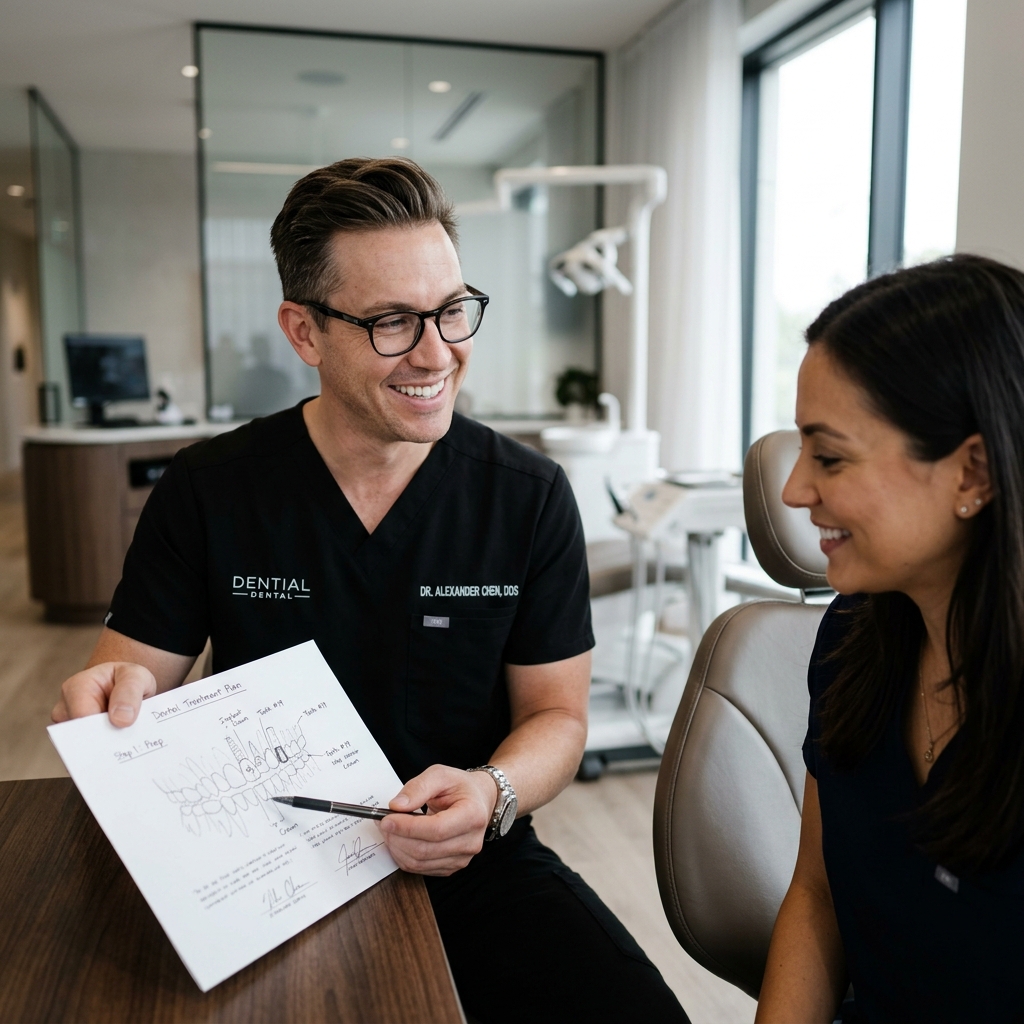
1. 3D scan and treatment plan
No moulds. A 5-minute intra-oral scan creates a digital model of your teeth, which we use to map every movement from start to finish. You'll see a preview of your final smile before committing.
2. Aligner fitting
Your full set of aligners is manufactured at once. We may bond small tooth-coloured "attachments" to specific teeth — these give the plastic something to grip and make tricky movements possible.
3. Daily wear
22 hours a day, removed only for eating and brushing. Most patients adapt within a week. The first 24 hours of each new aligner is the only time you'll notice pressure — after that, the aligner feels passive again.
4. Refinements
About 80% of cases need a short series of "refinement" aligners at the end to perfect the result. This is normal and built into our treatment fees.
5. Retainers
The most-overlooked step. Without a retainer, teeth slowly drift back over years. We recommend a fixed retainer behind the front teeth plus a removable nightly retainer. Treat them as permanent.
Things people don't usually mention
- You'll lisp for the first week. It always passes — your tongue adapts to the plastic.
- You'll need a cleaning routine. Aligners trap saliva, so you brush after every meal before re-inserting. It builds discipline.
- Your bite changes throughout treatment. Some weeks your teeth meet differently. This is intentional and resolves as movements complete.
- Coffee will stain them. Always remove aligners for dark drinks.
Are clear aligners right for you?
The honest answer is: for around 75% of orthodontic cases, yes. For the other 25% — typically severe crowding or skeletal issues — fixed braces still produce more reliable results. A consultation with a 3D scan will tell you which camp you're in.